
BIS Standards for Two & Three Wheeler Tyres – Certification, Testing & Approval Explained
In India’s rapidly growing automotive sector, ensuring the safety and durability of tyres is critical—especially for two and three wheelers, which dominate the roads. To maintain uniform quality and safety, tyre manufacturers must comply with standards set by the Bureau of Indian Standards (BIS).
This blog explains the BIS standards, certification process, testing requirements, and approval guidelines for two and three wheeler tyres in India.
Why BIS Certification is Important for Tyres
Tyres directly impact vehicle safety, fuel efficiency, and performance. BIS certification ensures that tyres:
- Meet safety and durability standards
- Perform reliably under Indian road conditions
- Reduce the risk of accidents due to tyre failure
- Comply with legal regulations
For manufacturers and importers, BIS certification is mandatory before selling tyres in the Indian market.
Applicable BIS Standards for Two & Three Wheeler Tyres
The primary Indian Standards applicable are:
IS 15627
- Pneumatic tyres for two-wheelers (motorcycles, scooters)
IS 15633
- Pneumatic tyres for three-wheelers (passenger & goods vehicles)
These standards define:
- Tyre dimensions and load ratings
- Construction requirements
- Performance parameters
- Testing procedures
- Marking and labelling
Key Requirements Under BIS Standards
To comply with BIS regulations, tyre manufacturers must meet the following:
1. Construction & Design
- Proper tread pattern and depth
- Reinforced sidewalls
- Uniform structure for durability
2. Performance Criteria
- Load-carrying capacity
- Speed rating
- Heat resistance
- Wear resistance
3. Safety Parameters
- Resistance to bursting
- Grip and traction performance
- Stability under different conditions
Testing Requirements for Tyre Certification
Before approval, tyres undergo rigorous testing in BIS-approved laboratories:
Endurance Test
Evaluates tyre performance under continuous load and speed.
High-Speed Test
Checks tyre stability and strength at high speeds.
Bead Unseating Test
Ensures the tyre remains properly fitted to the rim.
Strength Test
Measures resistance to external pressure and deformation.
Tread Wear Test
Assesses durability and lifespan of the tyre.
BIS Certification Process
The certification process under the ISI Mark Scheme includes:
Step 1: Online Application
Manufacturers apply through the BIS portal with product details.
Step 2: Documentation Submission
Key documents include:
- Manufacturing details
- Test reports
- Quality control procedures
Step 3: Factory Inspection
BIS officials inspect:
- Production facilities
- Testing equipment
- Quality assurance systems
Step 4: Sample Testing
Samples are tested in BIS-recognized labs.
Step 5: Grant of ISI License
Upon successful compliance, BIS grants certification and permission to use the ISI mark.
Marking & Labelling Requirements
Certified tyres must display:
- ISI mark
- Manufacturer’s name or brand
- Tyre size and type
- Load and speed rating
- Date of manufacture
This ensures traceability and consumer awareness.
Documents Required for BIS Certification
- Business registration certificate
- Manufacturing unit details
- Test reports
- Quality control documents
- List of machinery and equipment
Benefits of BIS Certification for Tyres
Getting BIS certification offers several advantages:
- ✔ Legal compliance in India
- ✔ Enhanced brand trust and credibility
- ✔ Improved product quality
- ✔ Eligibility for OEM supply and government tenders
- ✔ Competitive advantage in the market
Common Challenges in BIS Approval
Manufacturers often face:
- Complex testing requirements
- Documentation errors
- Delays in approval
- Lack of technical clarity on standards
Professional guidance can help streamline the process and reduce delays.
Conclusion
BIS certification for two and three wheeler tyres under IS 15627 and IS 15633 is essential to ensure safety, performance, and compliance in the Indian market. With strict testing and approval processes, BIS helps maintain high standards across the automotive industry.
For manufacturers and importers, obtaining BIS certification is not just a regulatory requirement—it’s a step toward delivering safe, reliable, and high-quality products to consumers.
If you want, I can also:
- Add SEO keywords + meta tags
- Convert this into a landing page for your website
- Or design a social media post/banner for this topic 👍
please write blog for the BIS Certification for Passenger Car Pneumatic Tyres – Radial & Diagonal Ply Compliance Guide
Here’s a professional, SEO-optimized blog you can use for your website 👇
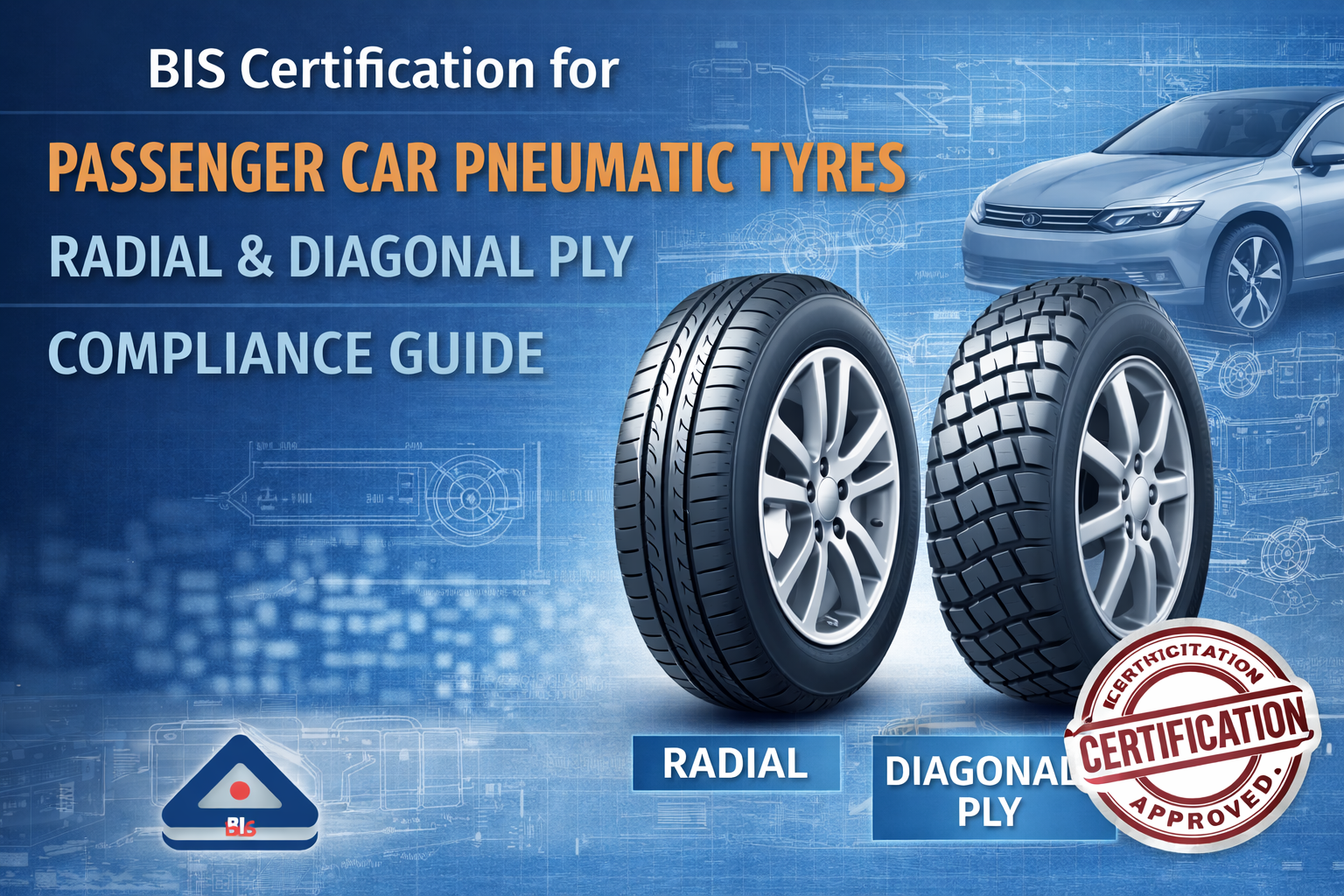
BIS Certification for Passenger Car Pneumatic Tyres – Radial & Diagonal Ply Compliance Guide
Passenger car tyres play a vital role in ensuring vehicle safety, performance, and driving comfort. In India, these tyres must comply with strict quality and safety standards defined by the Bureau of Indian Standards (BIS).
This guide explains everything you need to know about BIS certification for passenger car pneumatic tyres, including radial and diagonal ply tyres, applicable standards, testing, and approval process.
What are Passenger Car Pneumatic Tyres?
Passenger car pneumatic tyres are air-filled tyres designed for cars to provide:
- Shock absorption
- Better road grip
- Load-bearing capacity
- Smooth driving experience
These tyres are broadly classified into:
1. Radial Tyres
- Layers run radially (90° to direction of travel)
- Better fuel efficiency
- Longer lifespan
- Improved road grip
2. Diagonal (Bias Ply) Tyres
- Layers arranged diagonally
- Strong sidewalls
- Suitable for rough road conditions
- Lower manufacturing cost
Both types must meet BIS standards before being sold in India.
Applicable BIS Standard for Passenger Car Tyres
The primary Indian Standard is:
IS 15636: Pneumatic Tyres for Passenger Cars
This standard covers both radial and diagonal ply tyres and specifies:
- Tyre dimensions and load capacity
- Speed ratings
- Construction requirements
- Performance and endurance criteria
- Testing procedures
- Marking and labelling norms
Compliance with IS 15636 is mandatory under the ISI Certification Scheme.
Why BIS Certification is Mandatory
BIS certification ensures that tyres:
- Meet safety and durability requirements
- Perform reliably under Indian road conditions
- Reduce the risk of tyre-related accidents
- Comply with legal regulations
Selling non-certified tyres in India can result in penalties, product bans, or legal action.
Key Requirements Under IS 15636
To obtain BIS certification, manufacturers must ensure:
1. Structural Design Compliance
- Proper ply construction (radial or bias)
- Reinforced sidewalls
- Uniform tread pattern
2. Performance Standards
- Load-carrying capacity
- Speed rating
- Rolling resistance
- Heat resistance
3. Safety Requirements
- Resistance to bursting
- Stability at high speeds
- Proper grip and traction
Testing Requirements for Certification
Tyres must pass multiple tests conducted in BIS-approved laboratories:
Endurance Test
Evaluates tyre performance under continuous load and operation.
High-Speed Performance Test
Assesses tyre stability at maximum speed ratings.
Strength Test
Measures resistance to pressure and external forces.
Bead Unseating Test
Ensures the tyre remains securely fitted to the rim.
Tread Wear Test
Determines durability and lifespan of the tyre.
BIS Certification Process
The certification process under the ISI Scheme involves:
Step 1: Application Submission
Apply online through the BIS portal with product and manufacturing details.
Step 2: Documentation
Submit:
- Test reports
- Manufacturing process details
- Quality control plans
Step 3: Factory Inspection
BIS officials verify:
- Production capability
- Testing facilities
- Quality assurance systems
Step 4: Sample Testing
Samples are tested in BIS-recognized laboratories.
Step 5: Grant of License
After successful verification, BIS grants the ISI Certification License.
Marking Requirements
Certified tyres must include:
- ISI mark
- Manufacturer’s name or brand
- Tyre size and type
- Load index and speed symbol
- Date of manufacture
This ensures traceability and consumer confidence.
Documents Required
- Company registration certificate
- Manufacturing unit details
- Product test reports
- List of machinery and equipment
- Quality control documents
Benefits of BIS Certification
BIS certification offers several advantages:
- ✔ Legal approval to sell in India
- ✔ Enhanced brand credibility
- ✔ Improved product quality and consistency
- ✔ Eligibility for OEM and institutional supply
- ✔ Competitive advantage in the market
Common Challenges
Manufacturers may face:
- Complex testing requirements
- Delays in approvals
- Documentation errors
- Lack of technical understanding of standards
Working with experienced consultants can help simplify the process.
Conclusion
BIS certification under IS 15636 is essential for passenger car pneumatic tyres, whether radial or diagonal ply. It ensures that tyres meet strict safety, performance, and quality standards required in the Indian market.
For manufacturers and importers, obtaining BIS certification is not just about compliance—it’s about delivering safe, reliable, and high-performance tyres to consumers while strengthening brand trust.