
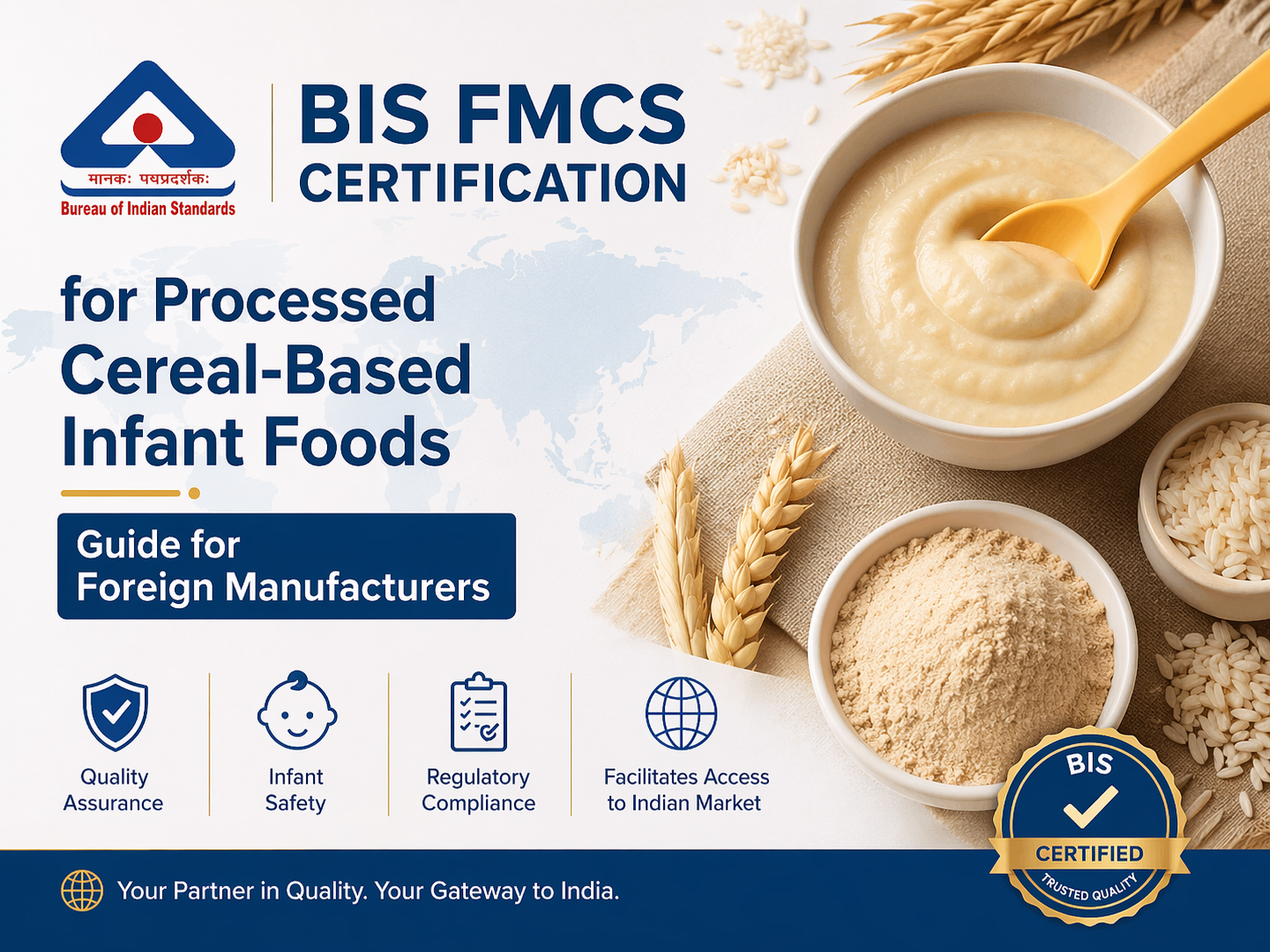
BIS FMCS Certification for Processed Cereal-Based Infant Foods – A Complete Guide for Foreign Manufacturers
Processed cereal-based infant foods are among the most sensitive food categories, as they directly impact infant health, growth, and development. Due to this critical nature, India enforces strict regulatory standards to ensure these products are safe, nutritious, and compliant.
For foreign manufacturers planning to export such products to India, obtaining certification from the Bureau of Indian Standards (BIS) under the Foreign Manufacturers Certification Scheme (FMCS) is mandatory.
This guide provides a detailed overview of BIS FMCS certification, applicable standards, compliance requirements, testing procedures, and approval steps.
What are Processed Cereal-Based Infant Foods?
Processed cereal-based infant foods are specially formulated nutritional products intended for infants, typically above 6 months of age. These foods are designed to complement breast milk or formula and support the transition to solid diets.
They are commonly made using cereals such as:
- Rice
- Wheat
- Oats
- Maize
To enhance nutritional value, they are often fortified with:
- Milk derivatives
- Vitamins and minerals
- Essential micronutrients
These products are formulated to ensure:
- Easy digestion
- Balanced nutrition
- Support for physical and cognitive development
Understanding BIS FMCS Certification
The Foreign Manufacturers Certification Scheme (FMCS) enables overseas manufacturers to obtain BIS certification and use the ISI mark on their products.
Why FMCS is Important:
- Mandatory for regulated products entering India
- Confirms compliance with Indian quality and safety standards
- Builds trust among consumers and regulators
- Ensures consistent product quality
Without FMCS certification, processed infant foods cannot be legally sold in India.
Applicable BIS Standard
IS 11536 – Milk-Cereal Based Weaning Foods
Processed cereal-based infant foods are governed under IS 11536 and related regulatory frameworks. This standard outlines requirements for:
- Nutritional composition
- Ingredient quality
- Manufacturing practices
- Hygiene and safety
- Packaging and labelling
Compliance with this standard is essential for certification approval.
Core Compliance Requirements
Foreign manufacturers must meet the following key requirements:
1. Nutritional Adequacy
- Proper balance of carbohydrates, proteins, and fats
- Mandatory fortification with essential nutrients
- Suitability for infant dietary needs
2. Ingredient Safety
- Use of high-quality, contamination-free raw materials
- Strict control over sourcing and processing
3. Microbiological Standards
- Absence of harmful pathogens
- Controlled microbial limits
4. Control of Contaminants
- Limits on heavy metals and toxins
- Compliance with pesticide residue norms
5. Hygienic Manufacturing
- Production in clean, controlled environments
- Adherence to food safety and hygiene protocols
Testing and Quality Evaluation
Before certification, products must undergo rigorous testing in BIS-recognized laboratories, including:
- Nutritional profiling (protein, fat, carbohydrates)
- Microbiological safety tests
- Contaminant and toxin analysis
- Moisture content verification
- Shelf-life and stability assessment
These tests ensure the product is safe and suitable for infant consumption.
Packaging and Labelling Guidelines
Proper packaging and labelling are critical for compliance. Certified products must display:
- Product name and category
- Recommended age group (e.g., 6 months+)
- Nutritional information
- Ingredients list
- Batch/lot number
- Manufacturing and expiry dates
- Country of origin
- ISI mark
Packaging must be food-grade, hygienic, and protective against contamination.
Step-by-Step BIS FMCS Certification Process
Step 1: Appointment of Authorized Indian Representative (AIR)
Foreign manufacturers must appoint an AIR based in India to coordinate with BIS.
Step 2: Application Filing
Submit the application along with complete product and manufacturing details.
Step 3: Technical Documentation Review
Includes:
- Product formulation
- Manufacturing process
- Quality control systems
- Test reports
Step 4: Overseas Factory Inspection
BIS officials conduct an on-site audit of the manufacturing facility.
Step 5: Product Testing
Samples are tested in BIS-approved laboratories.
Step 6: Grant of FMCS License
Upon successful evaluation, BIS grants the certification license.
Documents Required
- Company registration and legal documents
- Manufacturing unit details
- Product formulation and ingredient list
- Test reports
- Quality assurance and control documents
- Authorization letter for AIR
Advantages of BIS Certification
Obtaining BIS FMCS certification offers multiple benefits:
- ✔ Legal access to the Indian market
- ✔ Enhanced brand credibility and consumer trust
- ✔ Compliance with Indian regulatory requirements
- ✔ Competitive edge in the infant nutrition segment
- ✔ Improved product quality assurance
Common Challenges Faced
Foreign manufacturers often encounter:
- Complex regulatory procedures
- Strict compliance and testing requirements
- Coordination challenges for inspections
- Documentation errors or delays
Working with experienced compliance professionals can significantly ease the process.
Conclusion
BIS FMCS certification is a critical requirement for foreign manufacturers of processed cereal-based infant foods entering the Indian market. It ensures adherence to stringent standards for safety, nutrition, and quality—especially important for products intended for infants.
Beyond regulatory compliance, BIS certification demonstrates a commitment to delivering safe, reliable, and nutritionally sound products, helping brands build long-term trust and success in India.